Dev Diary — The Balance of Power
An End-game Situation for Flavorium Universalis.
Dev Note: I wanted more to do in the end-game european theatre apart from Revs. This situation is intended to be a punishing end-game challenge simulating european geo-politics of the rev-france, napoleonic, early-victorian period. See if you can shatter the balance of power, or maintain it — be rewarded either way. The situation can even re-emerge if the balance is threatened again.
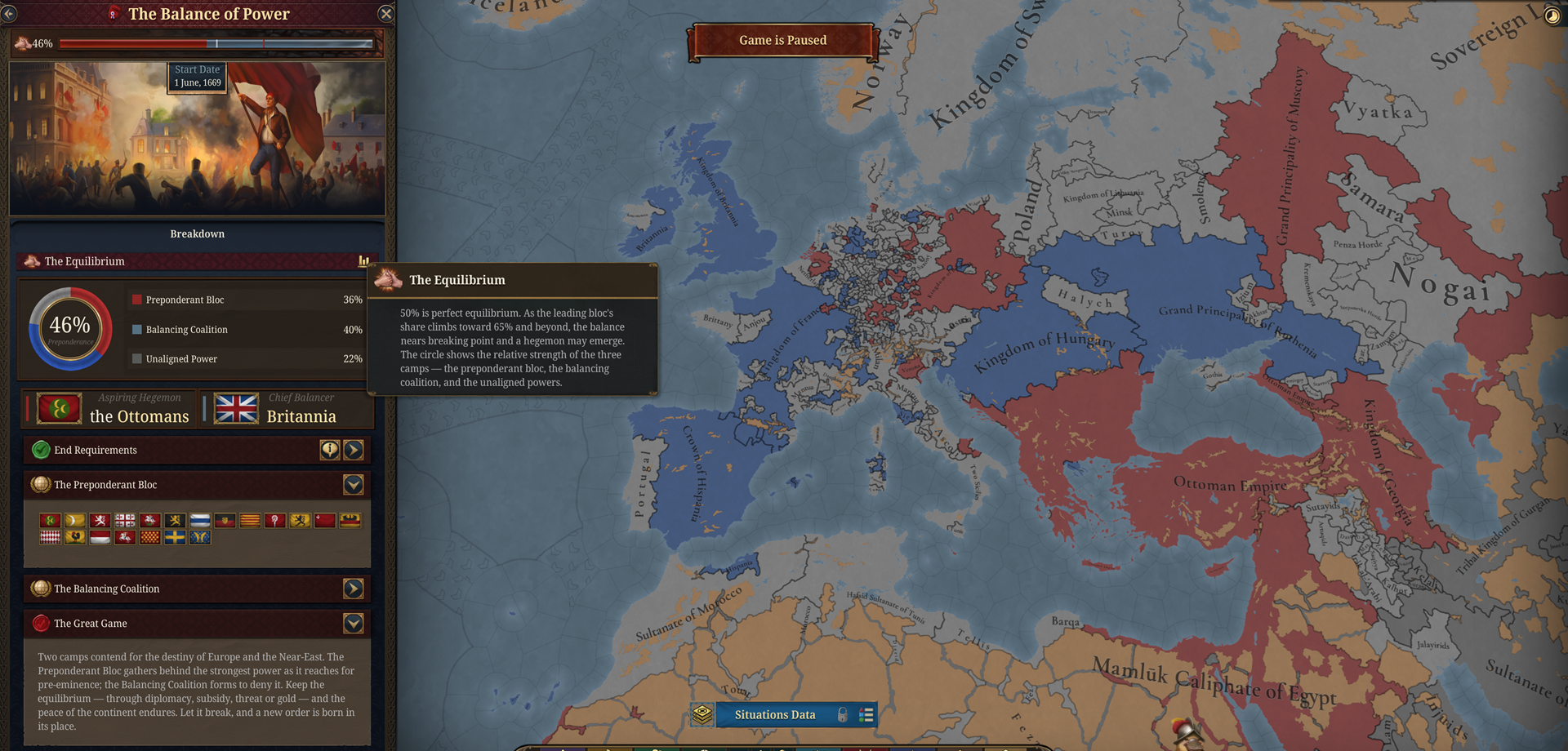
For two centuries the chancelleries of Europe played a single, deadly game: no one crown must ever overtop the rest. Flavorium Universalis brings that game to life as The Balance of Power — a continent-spanning situation in which an aspiring hegemon and the coalition that forms to deny it contend for the destiny of Europe and the Near-East.
It begins quietly. Once a great power embraces the Balance of Power Doctrine in the Age of Absolutism — or once the revolutionary era throws the old order into the fire — the strongest court is cast as the Preponderant Bloc, and the strongest power that fears it rises to lead the Balancing Coalition. Every eligible court is put to the question: which way will you lean?
How it plays
At the heart of the situation is a single number: the Preponderance Share, running from 0 to 100, where 50 is perfect equilibrium. It is not a hidden die-roll — it is the real weight of the two blocs, measured against each other. Bring a great power into your camp and the scale tips; lose one and it swings back.
As the leading bloc's share climbs past 65, the balance approaches breaking point — and a hegemon may emerge. The whole drama of the feature is the struggle over those few points in the middle.
You influence them through play, not menus:
- Choosing sides. Unaligned courts are courted by both camps — drawn by kinship, shared faith, fear, threats, or gold. A minister kept on Free Hands embodies the court that keeps its options open, courted by both and beholden to neither.
- The balancer's levers. As chief balancer you can subsidise a faltering partner, court a neutral into the fold, or convene a Congress to close ranks and stiffen the coalition's resolve.
- The hegemon's reach. As the aspiring power you can lean on weaker neighbours, buy their neutrality, bind them by marriage — or set one of your own kin upon a satellite throne.
Your cabinet matters here. A Diplomatic Mission minister draws the great game toward your court; a War Council minister presses every military advantage; a war-hawk or a recognised Master Balancer can turn a close-run event into a decisive one.
Taking a hand in the game
The balance is not something to merely watch tick by — every court can reach into it directly through actions in the situation panel and the bloc's organisation view.
The unaligned
Courts that have not yet committed can petition their way into a bloc — or make a virtue of standing apart.
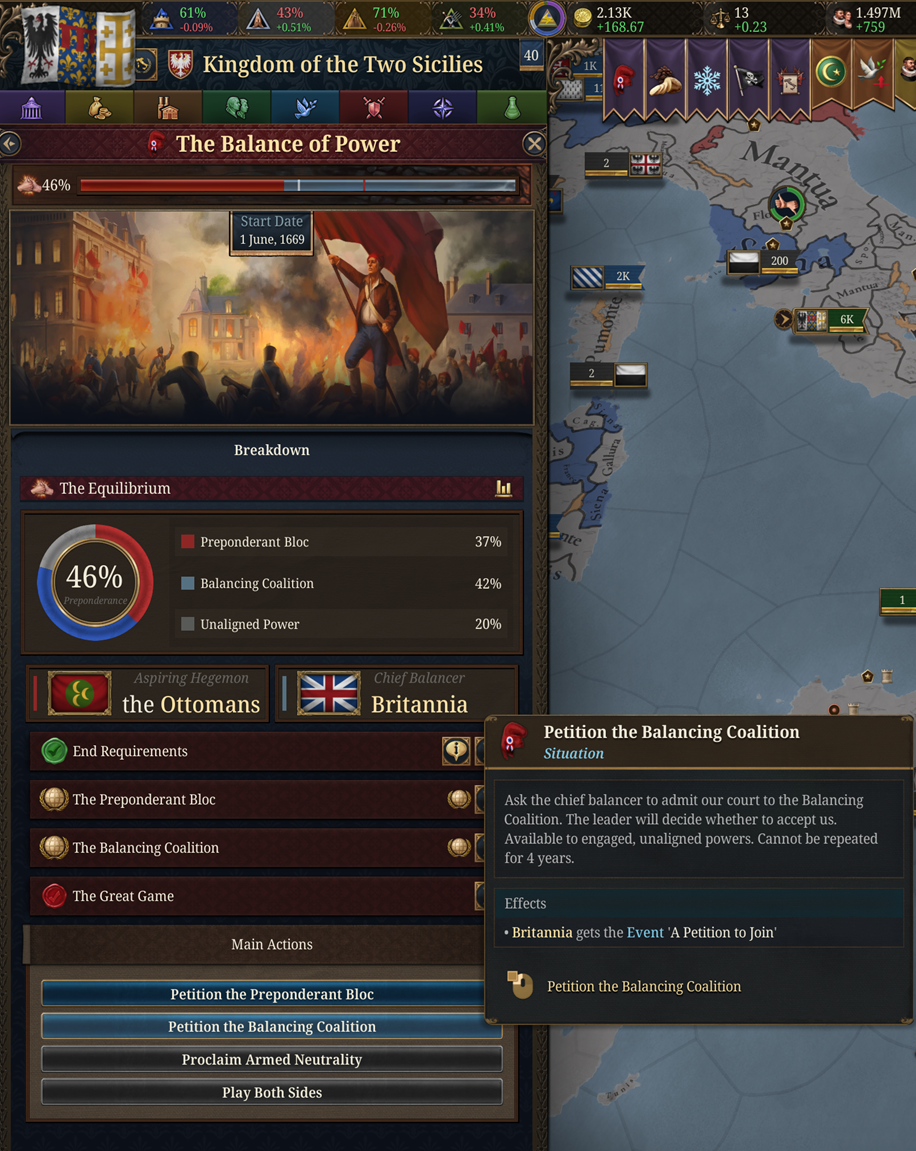
- Petition a bloc — ask the aspiring hegemon or the chief balancer to admit you. The leader decides; a friendly disposition (or a frightening Preponderance Share) makes acceptance more likely.
- Proclaim Armed Neutrality — keep your hands free and let foreign gold flow to keep you so. Requires a minister on the Free Hands duty.
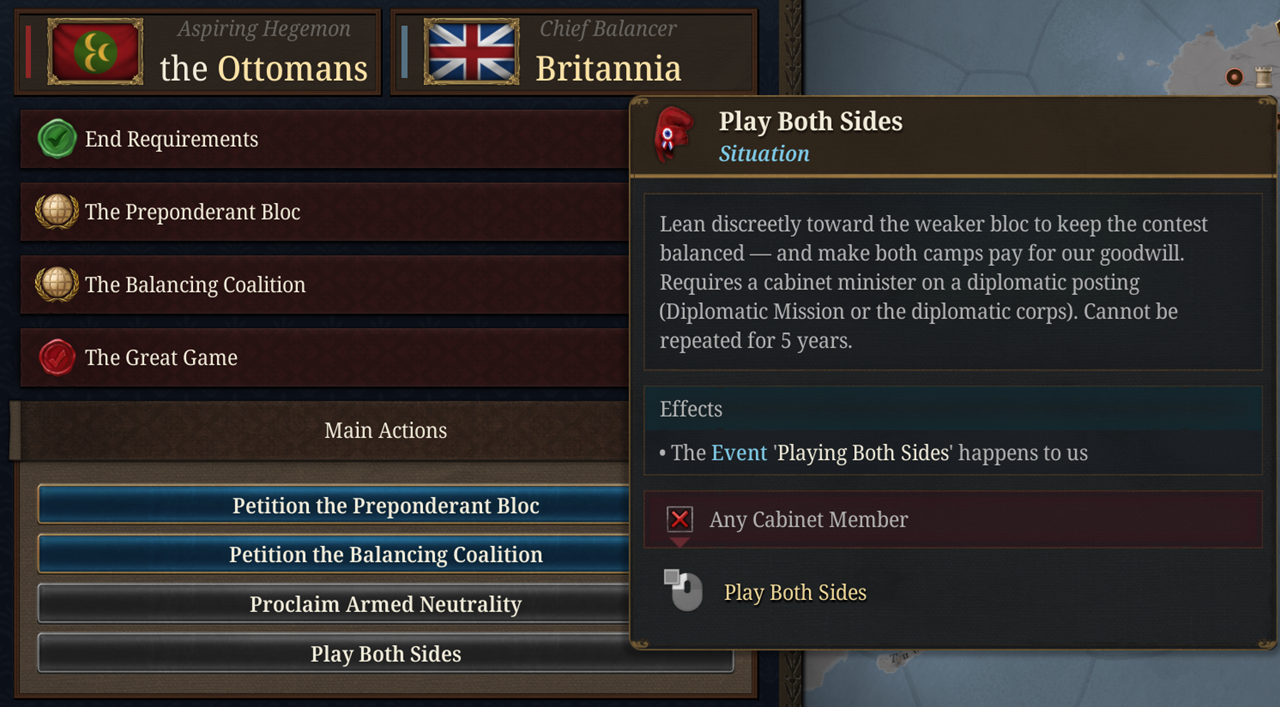
- Play Both Sides — lean discreetly toward the weaker bloc and make both camps pay for your goodwill. Requires a diplomat at work — your Diplomatic Mission or a vanilla diplomatic corps.
The bloc leaders
Each bloc accumulates a currency of its cause — Ambition for the Preponderant Bloc, Resolve for the Balancing Coalition — which its leader spends on bold measures from the organisation view (reachable straight from the new icon on each bloc's card in the situation panel).
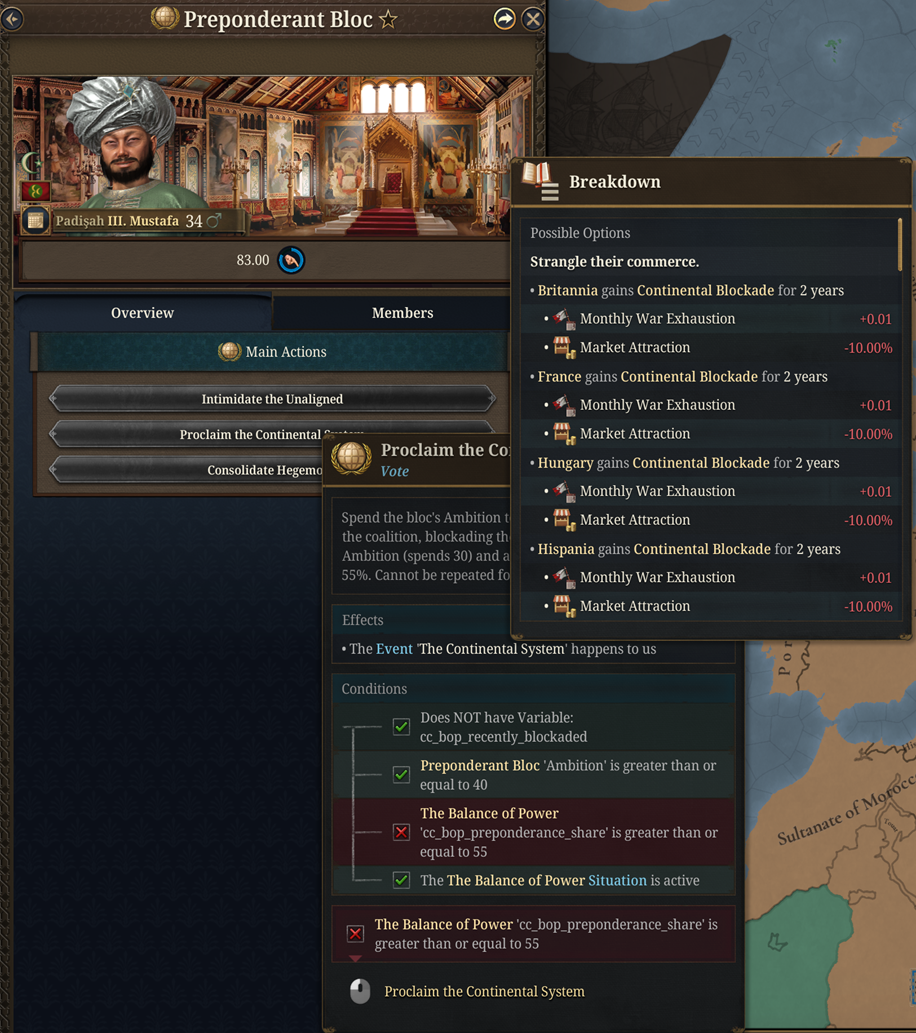
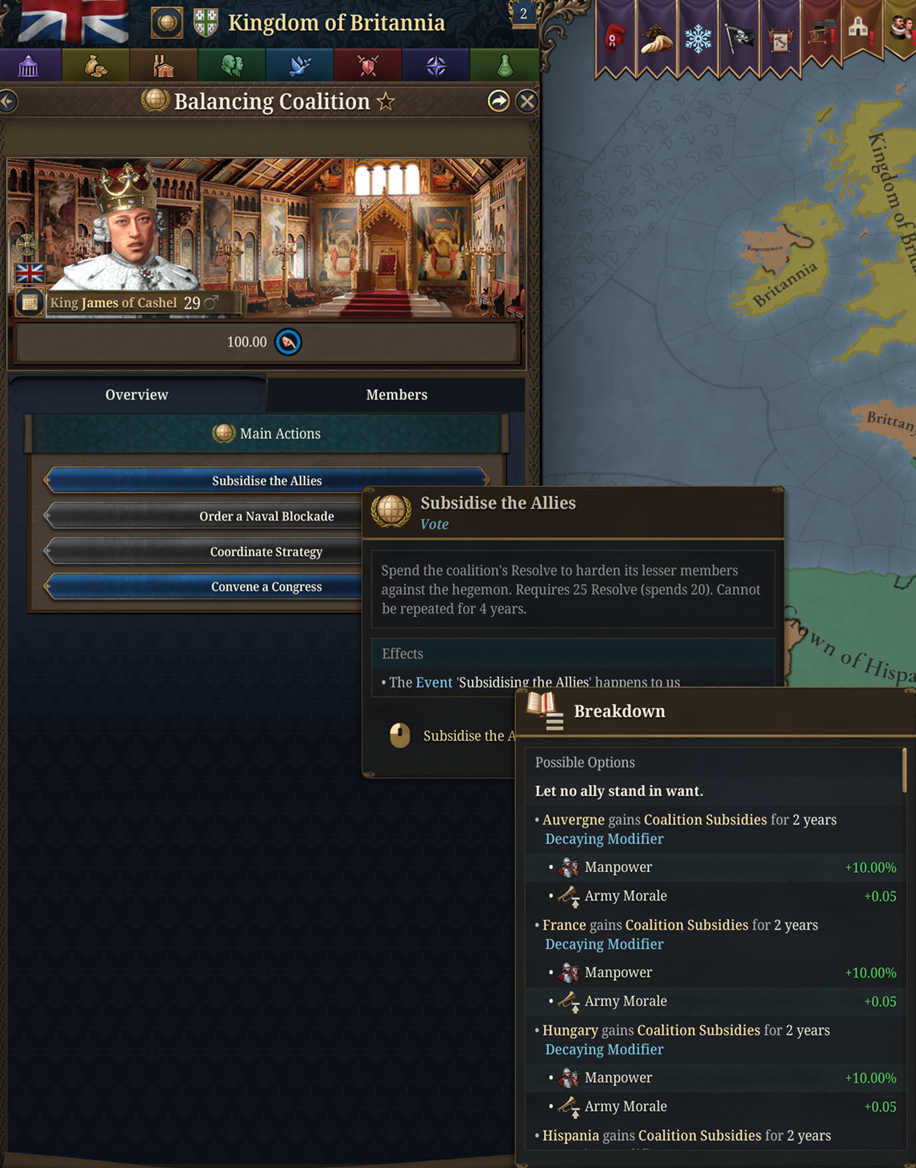
- The hegemon can Intimidate the Unaligned, proclaim the Continental System once dominant, or, with a great store of Ambition, Consolidate Hegemony for a hard swing of the balance.
- The balancer can Subsidise the Allies, order a Naval Blockade in answer to the Continental System, Coordinate Strategy to drag the balance back toward equilibrium, or Convene a Congress to close ranks decisively.
Non-leader members, for their part, may always leave their bloc — at the price of being branded a defector.
The currencies also speak for themselves
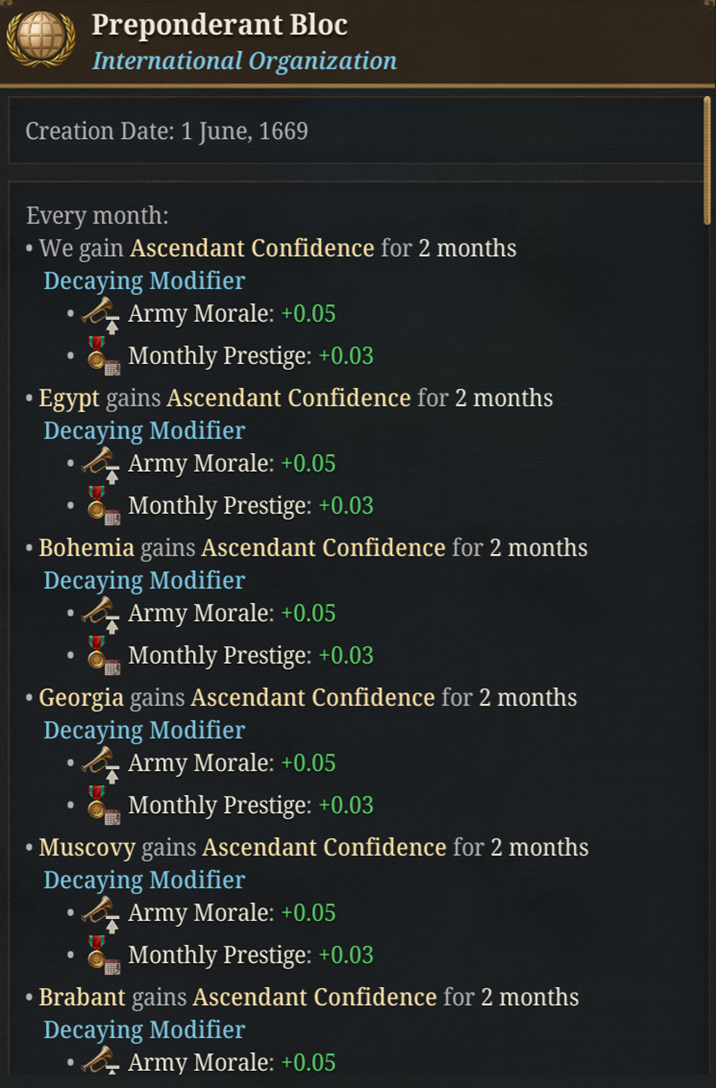
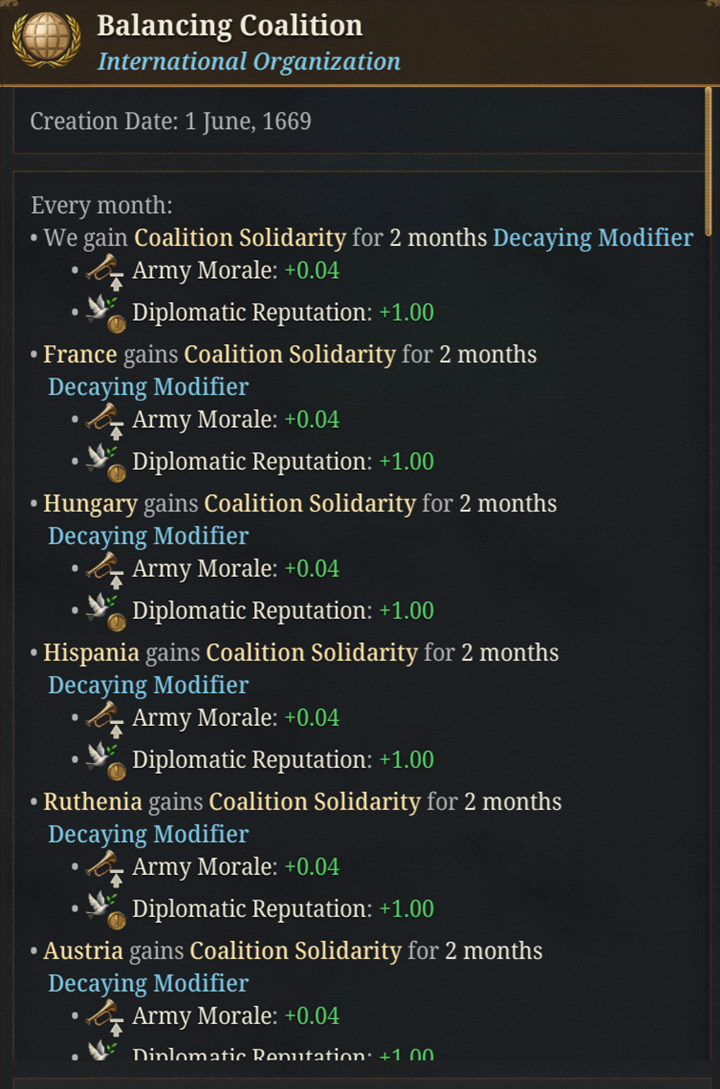
Ambition and Resolve are not only spent on actions; they colour the whole situation. A confident, ambitious bloc presses its event opportunities harder, while a resolute coalition reaps a passive monthly bonus and reaches more readily for the means to redress the scale.
Betrayal and the reversal of alliances
Rare, high-impact special events turn the whole contest on a single act of treachery — and they hinge on a bloc's currency and the character of the minister at court.
- The Reversal of Alliances — a wavering member, its bloc faltering and a scheming minister whispering at court, can cross over to the enemy entirely, swinging the balance hard and earning the lasting enmity of those it abandons. A recognised Master Balancer holds wavering allies to their word; a court schemer, cynical courtier, or corrupted official makes treachery far likelier.
- A Purchased Treason — a leader flush with Ambition or Resolve, served by a cunning minister, can spend that currency and a sack of gold to buy the defection of an enemy member outright.
These echo the real reversals of the age — the Diplomatic Revolution of 1756, Saxony changing sides at Leipzig in 1813 — where a single court's betrayal could remake the map.
The historical inspiration
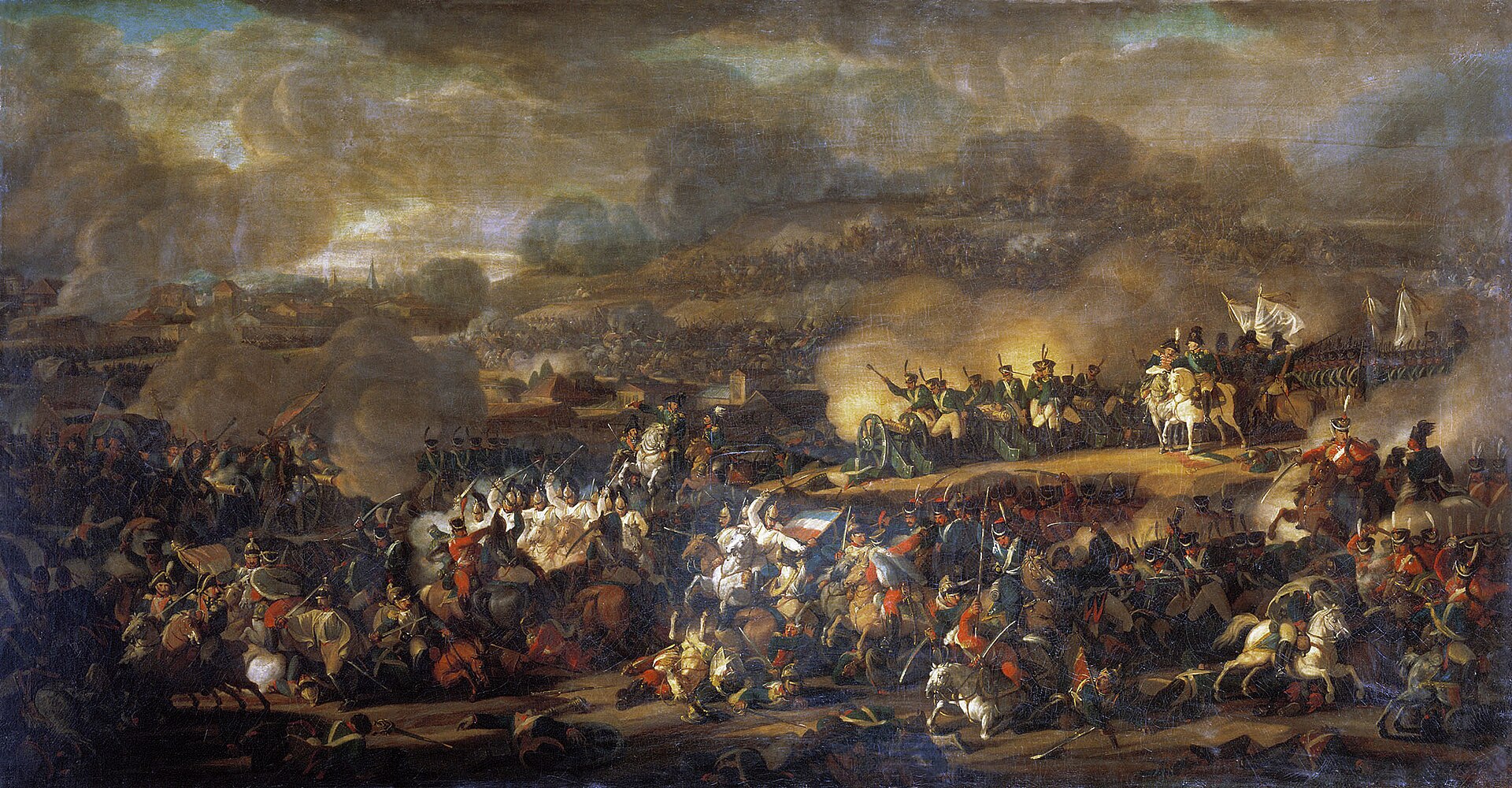
The feature takes its shape from the wars of the coalitions against Napoleon — the last and greatest test of the European balance in this era. Its events echo the real turning points of that struggle:
- The Continental System — close the markets of the continent against your rival's commerce, and watch the blockade bite both ways.
- The Bleeding Ulcer — a national insurrection that drains an occupying hegemon by a thousand small wounds, as Spain bled France.
- Scorched Earth — burn the land and fall back into the cold and the distance, until the great host starves amid the ashes, as Russia did in 1812.
- Levée en Masse — summon the whole nation to arms, conjuring armies beyond counting at a cost to the old order.
- A Separate Peace — the secret terms offered to a weary partner, as at Tilsit, that the coalition would name betrayal.
- The Battle of the Nations — the moment the hosts converge and the bid for mastery may break in blood and smoke, as at Leipzig.
And over it all hangs the memory of the Congress of Vienna — the settlement that ended the wars and tried to make the balance permanent.
How it can end
The situation resolves in one of four ways — and not all of them are defeats:
- Hegemony — one power masters the continent. Glory for the victor; a long humiliation for those who failed to stop it. A decisive, permanent break.
- The Eastern Deluge — an eastern colossus surges westward and overwhelms the old western order.
- Revolutionary Collapse — the careful equilibrium of kings counts for nothing once the people rise.
- The Concert of Europe — the equilibrium endures, congress and compromise maturing into a lasting diplomatic order.
The first three are final — the question is settled for good. But the Concert is not a tombstone. History teaches that even the best-managed peace eventually frays, and so a concert may, a generation later, give way to a new balance — fresh poles, fresh ambitions, the wary calculus begun anew. The peace, after all, could not last forever.
The Balance of Power can be toggled in the game-rule screen and arrives once a great power adopts the doctrine, or once the revolutionary era opens.